I was asked by a friend, Barrie, to test drive a Mitsubishi i-MiEV for the weekend sometime and I had a few trips to make this weekend I agreed to give it a go. It came from Humphris on Rose Hill where he works – apparently they wanted the view of a councillor!  I picked the car up on Saturday morning and was quite pleasantly surprised at how similar to any other small automatic it was in driving style and appearance. You even have a key to put in the “ignition” to turn it on and “start” the electric motor.

Once home I had a good look around the car inside and out. As it has no internal combustion engine it has electric power steering and there is a dedicated electric vacuum pump to provide the brake servo assistance. The brakes feel very normal, just like on any car of that size. Under the bonnet there is a 12v battery just like in a petrol or diesel car – it’s used for lights, wipers internal fans, indicators and so on. It also controls the electrics that manage the main traction motor and the big traction battery. The traction battery is huge and sits at the rear of the car under the back seat. It produces around 300v DC which is converted to 3-phase AC current to drive the traction motor. For those interested it produces about 66PS which is about the same a 1.1 litre small petrol car. The torque curve is very different though, with the electric motor having good torque right from a standstill, unlike a petrol engine which won’t do much at all below 1000rpm. The flexibility of the electric motor means that the car only has one gear as the motor can cope right through the speed range and reverse is just achieved by running the motor backwards. There is no clutch either as a motor doesn’t need it.  There is no spare wheel but instead a tyre repair kit and a small compressor for re-inflation.  A tiny gripe with the interior is that there is no clock so you can’t see what time it is very easily.

The first journey was a little drive up to the ring road then back down Brasenose Driftway and Crescent Road to see how it coped with the downhill run. As well as “Drive” mode the car also has “Braking” and “Comfort” modes – they are really just variations on a theme. Regenerative braking is used in all modes, an average amount in D, more in B and less in C. The car slows down quite rapidly to about 10mph in B mode with your foot off the accelerator, giving the battery a little charge while it’s doing it.

I got braver then and went with some friends up to Watlington Hill for a walk. We took the A40 and the M40 up to the Lewknor turn and while the car felt perfectly safe and stable at 70mph on the M40 (top speed is rated at around 80mph) it was eating the charge in the battery at an alarming rate so we slowed to 60mph. The car is definitely happier at City Speeds.  Up to about 50mph it is pretty efficient. There is a power gauge on the dashboard and the trick is to keep the needle in the “eco” area as the economy is far better then.

Later on Saturday we did the supermarket run in the i-MiEV. Again fine but the boot is rather little – we filled it with what I’d call a smaller than average weekly shop.

On Sunday I drove into Oxford and then out to Cumnor to lead worship at the United Reformed Church there. The car ran beautifully.  For lunch I took Gordon to the Bat and Ball at Cuddesdon then in the early evening I visited Wolvercote to babysit my nephew Oliver for a few hours.  I was glad of the small size of the i-MiEV in Wolvercote as my sister and her family live on a small side road with extremely tight parking!

Charging the car is achieved with a mains cable that is 5 metres long so quite easy to use if you have a driveway.  It takes 7 hours in total to charge the car from flat and does so at a rate of 3kW so uses about 21kWh of electricity to do it.  At today’s prices that costs about £2.50 – £3.  A full charge claims to do 90 miles and I reckon I’ll get pretty close to that if I stay off motorways.  In comparison, an efficient similarly-sized petrol car would probably use about 9 litres of petrol to do that, costing £12.60 at today’s £1.40/litre fuel price.  That’s quite a significant difference!  For someone with a daily commute up to about 20 or 30 miles away it would save a fortune in petrol or diesel costs!  You can also get a fast charge cable to use in dedicated charging points – this charges at 50kW and takes about half an hour to get the battery to 80%.

All in all I am impressed with the i-MiEV.  I could easily cope with it as my main car as almost all journeys I make are shorter than 20 miles and it’s rare to need to go over 50mph in and around Oxford.  For the odd weekend away and the summer camping trip it would not be outrageous to hire a car as that can be done pretty cheaply and conveniently these days.  As electric plug-in cars get cheaper and their range gets longer it may well become a serious proposition for the masses in a few years’ time. It makes particular sense if, like us, you have a Solar PV installation so you can charge the vehicle with electricity you’ve generated yourself.  At the moment the prices are too high and battery life (i.e. number of charges) is still uncertain but I’m sure this will all change in time.

I must say I was surprised at how drivable and comfortable the i-MiEV is.  It feels very much like a small auto with continuously variable transmission and I got used to it very quickly.  It will never win any speed trials but around town it’s perfect – it has good acceleration from a standstill and has the great advantage over a petrol or diesel car that when it is stationary, even just in traffic, it is using no energy at all.  It emits zero Carbon Dioxide (although of course the electricity has to be generated somewhere and that might produce CO2) and is virtually silent in running. Its small size, with very little outside the visible area at the front or back makes it an absolute breeze to park.

I shall be sorry to return it on Monday morning!

A full slate!

I am delighted to be able to report that Oxford Lib Dems have once again nominated a full slate of candidates for all 24 wards of our City for the upcoming local elections in May.

There are some really excellent candidates there – new enthusiastic people who are a real credit to their communities, current serving councillors and several who are hoping to return to serving as City Councillors after a break.

I hope you’ll enjoy reading about them – you can find them all at:

http://youroxford.org or
http://oxfordlibdems.org.uk/elections-2012

Some of you will be aware that I worship at St. Columba’s United Reformed Church on Sundays. This morning, those that arrived a bit early (around 10am) found most of the recycling bins (that I think belong to All Bar One) emptied all over Alfred Street so there was masses of rubbish and broken glass everywhere. Too much certainly to drive over. This was a big problem as we were due a visit from the Churches together in Central Oxford ecumenical donkey at 10.45am.  What you see in the picture is almost the end of the clean-up.  It was FAR worse than that.

One of our elders phones City Works and I was hugely impressed at how quickly they got there and what a great job they did of clearing up.  These guys really are  a credit to our City.  Thank you!

I do wonder why it is places like All Bar One are allowed to leave so many recycling containers all over the street on Saturday night into Sunday though.  They are incredibly ugly and I don’t think commercial collections happen on Sundays anyway.

There were three hearings today: A variation for Thirst Lodge on Park End Street, a new license for The Oxford Kebab House on Manzil Way and a license review for the Hi-Lo Jamaican Eating House on Cowley Road.

I couldn’t hear the first as the Council has a policy that ward councillors cannot decide licensing applications in their own wards. I am not alone in thinking this is silly as we are perfectly allowed to make planning decisions (which are much more final if they are approvals) and we have good training and strict rules about declaring conflicts of interest in any case.

The first hearing was basically an application for an extra half hour of opening at Thirst Lodge. Everyone acknowledged that this is a well-run venue but Thames Valley Police were objecting on the basis of the City Centre Special Saturation Policy (SSP). I have to say I think the Police were right to object. The decision was to grant the variation and personally I think that was the wrong decision as it undermines the validity of the  SSP. While Thirst is very well run so probably won’t be a problem with an extra half hour, I’d not like to commit to that position for all venues in the City Centre SSP area.

The second hearing was the license review for the Hi-Lo Jamaican eating house.  This was quite difficult as there was clearly some misunderstanding on the part of the license holder about what was permitted and what was not, as well as when it was permitted.  Part of the problem is that this was a license “grandfathered” from the pre-2003 Act licensing arrangements so some of the terminology in it was obsolete.  We had a good discussion with the licensee and with City Council Environmental Protection (EP) and eventually decided that a short suspension of the ability to play licensable live or recorded music was in order.  We were told that lots of measures had been put in place to mitigate the problems that had been the basis of lots of complaints (with lots of evidence from Environmental Protection Officers) but as the problems had been severe and ongoing we felt it necessary for another visit from EP to happen so this could be officially checked.  If all was in order we were happy then for the licensing team to re-instate the licensable music on the premises license.  We also clarified that after the terminal hour for licensable music then background (non-licensable) music should be just that – barely audible in the premises itself, let alone in adjoining premises or outside.  I hope that things will be resolved soon and that the license can be re-instated once EP is happy that the premises can operate without damaging the rights of it neighbours to quiet enjoyment of their own premises.  It should be noted that we did nothing to the hours during which the venue is allowed to serve food or alcohol as neither of these had been the cause of any complaints.

The final hearing was by the Oxford Kebab House which is on Manzil Way in the medical centre.  The application was for live and recorded music and again, I think there was some confusion about what type and level of music actually required a license.  The applicant explained that the lice music would be acoustic, Persian music played in the upstairs restaurant area up to only around 11pm.  There were concerns from some residents about noise in and around the venue but we felt that these could be managed as the premises operator is experienced in such things and has a good record.  We encouraged all neighbours to keep in touch and reminded all that the license could be reviewed if it transpired there were problems at an unacceptable level.

As always, please note that this post does not form an official record of proceedings and should not be treated as such. The decision notice from the City Council is always the definitive document.

I was invited at short notice to dinner at Exeter College today by a friend.  I had the great pleasure of sitting next to the Rector, Dr Frances Cairncross and we had a good discussion about Labour’s housing policies in the City including the apparent contradiction of making development difficult by insisting on huge financial contributions to other housing and the push to get more and more students out of family housing so it can be released to the rest of the market.

The dinner was extremely enjoyable and it was good to talk a bit about local politics (at their instigation) with some academic members of Exeter’s staff.  One College member was celebrating her fifth birthday as she had been born on February 29th, 20 years ago.  Actually I’d say it was her fourth as there was no leap year in 2000!

After the meal we were treated to an excellent presentation by the Thames Valley Police Chief Constable, Sara Thornton CBE QPM.  Sara had been the guest of The Rector of the College and was giving a talk to some students studying criminology.  The title of the talk was “Does it Matter if there are Fewer Police Officers in the Future?”.  I was hugely impressed at Sara’s strong sense of justice both for victim as well as the accused.  I thought her insights into what makes good Policing and how communities work were really fascinating and resonated very much with my thinking about Policing being about helping people to get it right as well as just catching and criminalising them when they get it wrong.  Sara also had great insight into targeting Policing where it will have the best effect.

I attended this event today at the invitation of the Oxford University Living Wage Campaign.  I must admit Living Wage is not really something I’d thought about before but the speeches from the panel I heard this evening were incredibly compelling.  There are aspects of the living wage that I’m slightly ashamed to say I had never really considered before.  The session felt a little bit like diversity training in that it completely moved me on from seeing a living wage as a burden on an employer to seeing it as a positive advantage, just as is paying proper attention to diversity by doing all you can to include as many people as possible.  It never really occurred to me that paying more money to poorer people is actually much better for the economy than paying it to richer people as the former will spend it locally whereas the latter may well squirrel it away in offshore tax avoidance schemes where it does nothing to benefit our economy .  There are the obvious morale, attendance, commitment and retention advantages of a living wage also.  If nothing else then to me paying a Living Wage is simply a matter of common decency and justice that all should be able to expect.

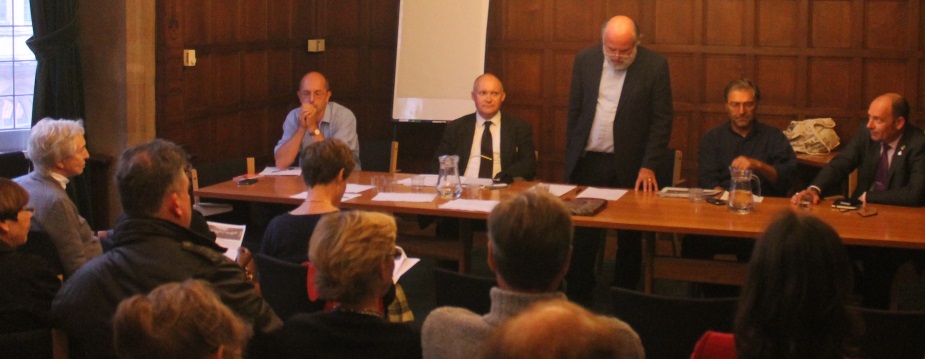
The event was held in the Exam Schools of Oxford University, and that’s quite ambitious as the rooms are not small.  The panel was of the highest quality and the event was extremely well-attended with over a hundred people there.  This just showed me how important people see this issue to be, particularly in the light of housing and the cost of living being so expensive in Oxford.  A member of Oxford City Council, Van Coulter, made an excellent speech about the need for a living wage and reminded us that Oxford has one of the highest cost of living to average income ratios in the whole country.  He said it’s like paying London prices on a West Midlands wage and I think he’s right!  Van also made the excellent point that if people are forced to live on very low wages then they make compromises like buying cheap, unhealthy food, that ultimately shorten their lifespans and of course make them less efficient employees.

It’s also great to hear about all the excellent work the Living Wage Campaign has been doing with Oxford University and its Colleges.  Some Colleges have already adopted a living wage and apparently discussions with the University are going well.  This pleases me as an employee of the University, although I must say not one who has any issue whatsoever with his own wages!  There were quite a few College bursars present as well as some college employees on lower wages and apparently some useful discussions were had after the main speaker event.

If you are interested in learning more about the Living Wage campaign the I recommend following @oxlivingwage on Twitter, emailing livingwage@ousu.org or if you want to focus on these issues during Lent 2012 from a Christian perspective then the Call to Change website gives more information about the Living Wage in the wider UK.

All said a first-class student-organised event about a massively important issue for Oxford that certainly got me thinking to an extent that not many things do!  What a far cry from the image students some East Oxford people seem to have that says they are “increasing to unbearable amounts already in this area and they do not need any further encouragement or welcoming into our community because they bring nothing positive” (See my previous blog post on this).

This was a rather informal meeting but useful nonetheless.  It was good to see quite a few students present as well as someone from Oxford University’s Accommodation office, a member of staff from Christ Church and Gordon Reid from City Centre management.

We had a good discussion about student hopes for the City Centre and the Wayfinding project that has been going on.  The signs have been tendered for and there is now a project to provide QR codes for them to give people more contextual information.  I reminded people that the excellent Mobile Oxford service from Oxford University also provides a lot of this information and that the Wayfinding project really ought to work in partnership with it.  QR codes are fine but there is so much more that mobile Oxford can do!

We then moved onto the issue of student housing.  We had a presentation about the HMO licensing scheme which was interesting and while there are many good things about it I do have concerns that it will have a drastic effect on an already short supply of essential housing for students and many other people in Oxford.  For example we heard how the council is using web sites that advertise house shares to track down and penalise landlords.  Wouldn’t it be so much better to use council resources putting adverts on those websites to educate tenants and prospective tenants about the need to check for a license.  Wouldn’t it be so much more positive to spend effort helping tenants get appropriate housing than assuming landlords are somehow bad and evil?

I’ve posted a lot about this so won’t go on about it here but I do hope that the Council will sometime soon accept that Landlords are generally good people who are genuinely trying to do the right thing, and thus focus on education and support rather than pursuit and penalisation.

We met today as part of the regular meeting cycle.  We had a useful and impressive update on licensing activities from Julian Alison, our licensing manager and it was good to have a presentation from Inspector Katy Barrow-Grint of Thames Valley Police.  Katy is the new City Centre and North Oxford inspector and I was impressed at her commitment to partnership working with the City Council as the licensing authority.  I had raised an issue with her by email this morning and she had researched it thoroughly and had an excellent answer ready for the meeting.  I was grateful for that.

Another items on the agenda was the relaxation of licensing hours for the Queen’s Diamond Jubilee in July this year. It means that on Fri 1st Jun and Sat 2nd Jun premises that are already licensed will be able to carry on those licensable activities until 1am the next morning if they currently have an earlier termination of licensable activities.

We also looked at some proposals to address some of the problems of late-night drinking.  The Government is currently consulting on a Late Night Levy (on clubs etc. to fund more policing) and Early Morning Restriction Orders (EMROs) that local authorities can use to to restrict the sale of alcohol in the whole or a part of their areas between 3am and 6am on all or some days, to address specific problems caused by the late night supply of alcohol in their areas.

The meeting took about an hour.

This meeting was held at St. Barnabas School in Jericho as we rotate around the area.

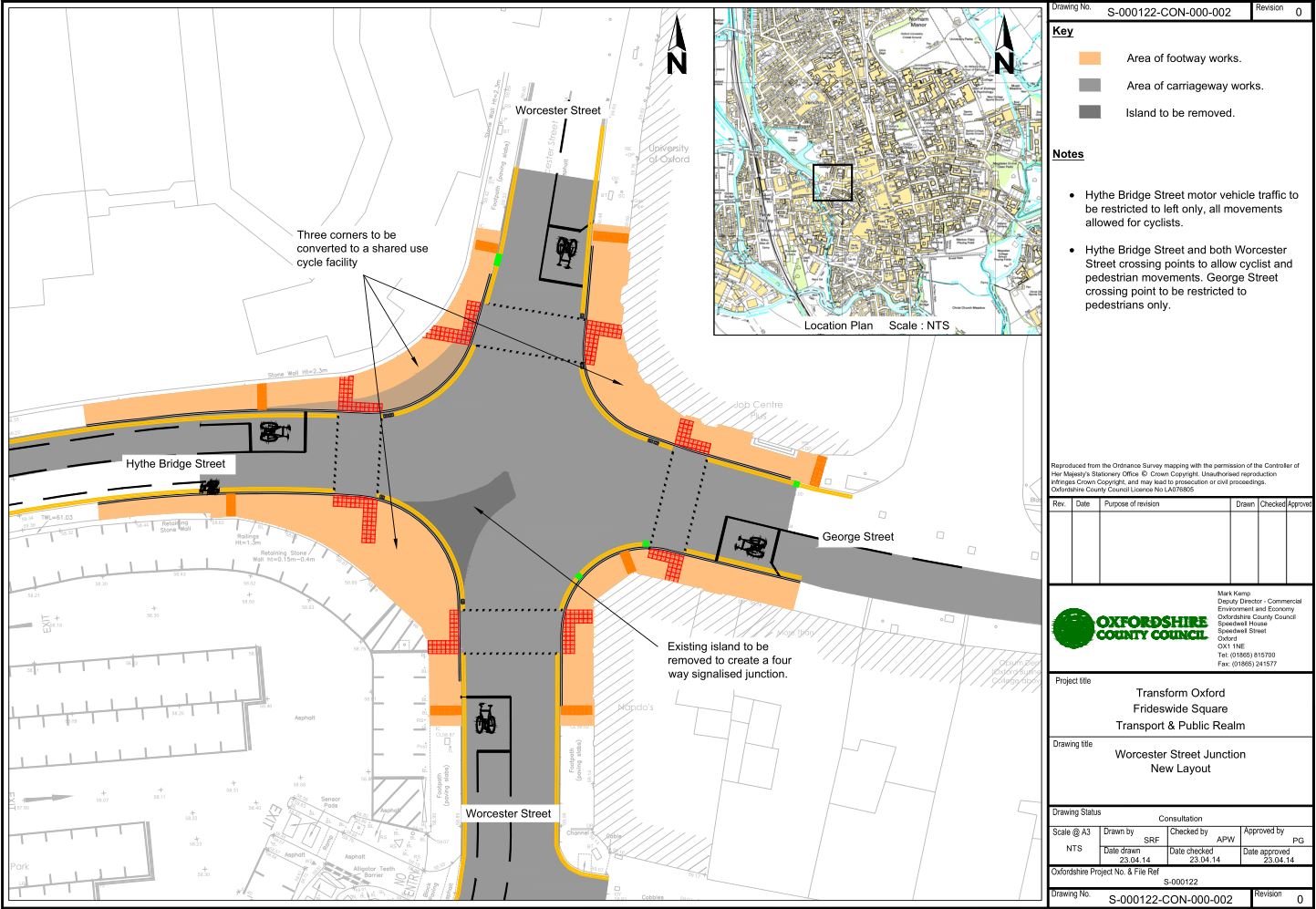
The main focus of the meeting was a discussion on community-led planning, both in terms of community work and planning in the development control sense.

The Head of City Planning attended and gave a useful overview of the Localism Bill and its provisions for Neighbourhood Plans.  We were referred to a short overview document (PDF) about Neighbourhood Plans too.

A good discussion ensued and I think some of the salient points are:

1. The localism bill seems to be more aimed at rural communities to allow them to plan for and authorise more development so it’s not clear how useful it would be in a crowded urban area like Oxford.

2.  Councillors are very tightly bound by planning law and when we are determining applications it does feel more like we are serving those laws than serving the desires of our electorates.  If we refuse things when there is no planning reason we are likely to get the decision overturned by an unelected planning inspector and may get costs awarded against us as a local authority.  That has to be paid out of Oxford taxpayers’ money so serves nobody.

I shall keep a close eye on how the Localism Bill develops.

Although the meeting was in Jericho it was a shame very few people from Jericho attended.  I do also question how sensible it is having a meeting in a cold primary school hall, where the chairs are more suitable for 5-11 year olds than adults!

This was a long meeting but a pleasantly constructive one.   It’s the annual meeting where the budget is proposed by the administration and then the other party groups propose amendments which inevitably fall because the administration has a majority.  But we have to go through the process as it is a good chance for political groups to show their priorities for the City, especially in the run-up to local elections.

As we LibDems are not really a million miles from the Oxford City Administration on lots of issues we take the view that it’s better to propose a small-ish number of sensible and properly costed amendments to the administration budget rather than wasting lots of officer time preparing a budget that we know won’t get voted through anyway.  I’m pleased to say that our budget amendments were confirmed by the senior financial officer (the Section 151 Officer) as being financially workable and thus legal.   This was not the case for the symbolic mess that the Green Party proposed!  (Yes that is a political comment but this is a political blog!).

Our budget amendments were presented expertly by Cllr Mark Mills, our Deputy Leader, and the headline additions were:  Re-introduce democratic area assemblies; restore a full out-of-hours noise complaint service; 24 hour help service for all tenants (not just those in social housing); double the number of apprenticeships offered by the council; free parking for electric vehicles; and retaining the current Dial a Ride service.  There was more.  These extra costs would be offset by cutting councillor allowances; cut war councillor budgets; and delete proactive river bank work.  The budget was well-received by all present, including some clapping from the public gallery.  The Administration response was gracious and I appreciated that greatly.

There was time for the normal questions to councillors so I made sure I asked some more about the HMO licensing scheme:

My first was about a home with a couple “living together as if spouses or civil partners” and one other person.  The answer seems to imply discrimination against people based on martial status, which I thought was illegal!

My second question was clarifying if where a house, if classified as an HMO because it has 3 or more lodgers with resident landlords, needs to count the landlord(s) in the numbers in the HMO – the answer was yes.  This of course means even more expense for people just letting rooms in their houses to help make ends meet and to provide hugely needed accommodation for many people in our City.

My third was really just an observation that the council lets its own tenants (often vulnerable families with children) live in much worse conditions than it is now allowing private lets of non-vulnerable adults to live in.   The answer seemed vague but I think it was basically because the council has the power with HMOs but not with families – frankly I think that’s rubbish as the Administration could do all sorts of improvements to its own housing that it lets to tenants if it chose to.

My final question pointed out the obvious paradox in the City Council at the moment whereby it pays landlords a £600 finders fee plus expenses for landlords with a two-bed house to let but that for a three-bed there are onerous HMO checks and fees of £362 plus £150 per year to pay.  The answer was that there is a shortage of two-bed properties in Oxford.  If the Administration thinks the current HMO scheme is going to do anything at all to improve that situation then frankly I think its members are bonkers!

Previous